
Pay Online

Common Children’s Dental Issues and How a Greeley Kids’ Dentist Can Help


It’s a typical weekday in Greeley. You’re packing school lunches, making sure homework is signed, and rushing out the door for soccer practice at Bittersweet Park. Somewhere between snack time and bedtime, your child mentions that a tooth “feels weird.” You make a mental note to check it later.
That’s how many dental concerns begin quietly. A small white spot, mild sensitivity, or bleeding during brushing can go unnoticed until discomfort turns into pain. For busy Weld County families, it’s easy to miss early warning signs.
The good news is that most childhood dental issues are preventable with early attention. A trusted kids’ dentist can help identify problems before they grow, keeping your child comfortable and confident.
In this guide, you’ll learn what to watch for, why certain issues are common in Greeley, and how proactive care makes a lasting difference.
Why Children in Greeley Face Unique Oral Health Challenges
Greeley families lead active lives. Between school events, youth sports, and community gatherings near Lincoln Park, kids stay on the move. While that’s great for overall health, it can create challenges for oral care.
High-sugar snacks and sports drinks
Lunchboxes often include juice boxes, fruit snacks, or granola bars. After practice, sports drinks may seem like a quick hydration fix. Unfortunately, these items coat teeth in sugars and acids that feed cavity-causing bacteria. Even “healthy” snacks can contribute to decay when consumed frequently throughout the day.
Busy school schedules
Early mornings and packed afternoons can disrupt brushing routines. Some children rush through brushing before catching the bus. Others skip flossing after long days. Small habits, repeated daily, add up over time.
Cold winters and dry air
Greeley winters are dry, and indoor heating systems can reduce saliva flow. Saliva protects teeth by washing away bacteria and neutralizing acids. When mouths feel dry, the risk of cavities increases.
After-school independence
As kids grow, they gain independence. They may grab snacks without supervision or forget to brush before bed. Parents assume routines are in place, but gaps often appear during transitional years.
These factors don’t mean dental problems are inevitable. They highlight why prevention matters. A child-focused provider understands these local lifestyle patterns and builds care plans around them. Early education, routine monitoring, and practical guidance help families stay ahead of problems instead of reacting to emergencies.
Common Dental Issues Children Face
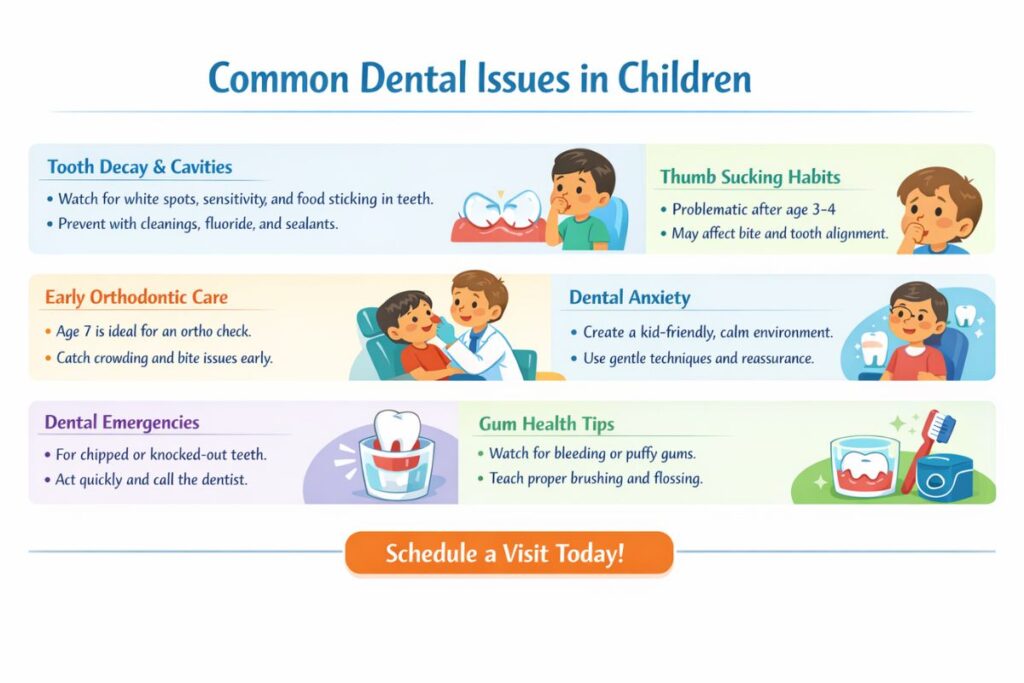
Tooth Decay and Cavities in Kids
“Why does my child keep getting cavities?”
Cavities remain the most common chronic childhood condition. They develop when bacteria combine with sugars to produce acid that weakens enamel.
Early Signs Parents Miss
- White spots near the gumline
- Sensitivity to cold or sweets
- Food sticking in teeth more often than usual
These signs often appear before visible holes form.
How a Greeley Dental Team Helps
Professional cleanings remove hardened plaque that brushing cannot. Fluoride strengthens enamel and helps reverse early damage. Dental sealants protect the deep grooves of molars, especially during cavity-prone years. Nutritional counseling offers realistic strategies for managing snacks without eliminating fun.
By addressing risk factors early, a kids’ dentist in Greeley can significantly reduce repeat cavities.
Thumb Sucking and Pacifier Habits
“Is thumb sucking bad for teeth?”
For infants and toddlers, thumb sucking is normal. It becomes concerning when the habit continues past age 3 or 4.
When It Becomes a Problem
- Persistent sucking after preschool age
- Noticeable changes in bite alignment
- Front teeth shifting forward
Gentle Intervention Options
Monitoring jaw growth ensures development stays on track. If needed, small habit-breaking appliances can discourage prolonged sucking. More often, parent coaching and positive reinforcement solve the issue without stress.
Early Orthodontic Concerns
“When should kids see an orthodontist?”
Many parents believe orthodontics starts in the teen years. In reality, age 7 is recommended for an initial evaluation.
Watch for:
- Crowding
- Crossbite
- Underbite
- Mouth breathing
Early assessments don’t always mean braces right away. Sometimes treatment involves simple monitoring. Other times, interceptive care guides jaw growth and prevents more complex problems later. The difference between observation and active treatment depends on timing, growth patterns, and overall oral health.
Dental Anxiety in Children
“My child is afraid of the dentist.”
Fear can stem from unfamiliar environments, sensory sensitivities, or past negative experiences.
A child-centered practice makes a difference through:
- A welcoming, kid-friendly atmosphere
- The tell-show-do technique that explains each step
- Positive reinforcement and praise
- Gentle behavior guidance
When children feel heard and respected, appointments become smoother over time.
Dental Emergencies in Active Kids
“What should I do if my child chips a tooth?”
Between playground falls and sports injuries, dental accidents happen quickly.
Common scenarios include:
- Collisions during soccer games
- Falls from bikes or scooters
- Knocked-out teeth during rough play
Quick Action Checklist:
- Stay calm.
- Locate the tooth or fragment.
- Keep it moist in milk or saliva.
- Call immediately for guidance.
A fast response improves the chances of saving the tooth and preventing complications.
Gum Health and Early Gingivitis
Bleeding during brushing is not normal for children. It often signals plaque buildup or improper brushing technique.
Signs include:
- Swollen or red gums
- Persistent bad breath
- Tenderness during brushing
Teaching correct brushing angles and encouraging flossing make a noticeable difference. Routine exams allow early intervention before gum inflammation progresses.
How Routine Visits Prevent Bigger Problems
Routine dental visits are one of the most effective ways to prevent significant oral health issues in children. At Luker Dental, we focus on proactive care that ensures your child’s smile remains healthy and strong for years to come. These visits aren’t just about cleaning; they serve as a critical opportunity for early intervention and long-term prevention.
Professional Monitoring of Growth and Development
As your child grows, their teeth and jaw undergo rapid changes. Routine visits allow us to track the development of your child’s teeth and gums, identifying potential concerns early. Monitoring these changes ensures that any issues, such as crooked teeth, misalignment, or bite problems, can be addressed promptly before they require more extensive treatments.
Early Cavity Detection
Tooth decay can begin long before a cavity becomes visible or painful. Regular checkups help us detect cavities in their earliest stages, often before your child even notices any discomfort. With early detection, we can intervene with minimal treatment, preventing more severe decay and the need for fillings or other restorative procedures later on.
Personalized Prevention Plans
Each child’s oral health needs are unique. By understanding your child’s habits, diet, and overall health, we can create a personalized prevention plan that caters specifically to them. This may include tailored advice on brushing, flossing, dietary choices, and even the use of fluoride treatments or dental sealants to protect vulnerable teeth.
Parent Education
Routine visits provide an excellent opportunity for parent education. We ensure you’re informed about the best practices for your child’s oral health, whether it’s how to encourage proper brushing, manage thumb-sucking habits, or make healthier snack choices. Knowledge empowers you to support your child in maintaining great oral health between visits.
By investing in regular dental care, you’re not just addressing immediate concerns. You’re setting your child up for a lifetime of healthy smiles. Regular visits ensure that potential problems are caught early, reducing the need for more complicated procedures and making oral health a natural part of your child’s routine.
When to Schedule an Appointment
Don’t wait for severe pain to take action. Contact a kids’ dentist in Greeley if you notice:
- Persistent tooth discomfort
- Facial swelling
- Ongoing bad breath
- White or brown spots on teeth
- Delayed tooth eruption
Early evaluation often means simpler treatment. Luker Dental works with families throughout Greeley to address concerns quickly and clearly. Even if you’re unsure whether something is serious, asking early provides peace of mind.
Most childhood dental concerns are preventable. Cavities, gum inflammation, and bite issues rarely appear overnight. They develop gradually, offering warning signs along the way. Early detection makes treatment easier and less stressful for everyone.
Families across Greeley deserve practical, prevention-focused care close to home. Luker Dental supports children through every stage of growth, from first teeth to teen years. If you’ve noticed any of the signs discussed or simply want reassurance, schedule an exam today. Protecting your child’s smile now helps ensure confident, healthy years ahead.
FAQs
Can my child have a teeth cleaning even if they haven’t had a cavity?
Yes! Teeth cleanings are essential for children, even if they haven’t had cavities. Professional cleanings remove plaque buildup that brushing alone can’t, keeping teeth healthy.
Why is my child’s breath bad, and what can I do about it?
Bad breath in children is often due to poor oral hygiene or a dry mouth. Ensure your child brushes twice a day, flosses, and drinks plenty of water. If it persists, consult a dentist.
When should I start teaching my child to floss?
Start flossing your child’s teeth as soon as they have two teeth that touch. By age 5 or 6, children can begin learning to floss on their own with supervision.
How do I get my child to stop using a pacifier?
Gradually reduce pacifier use after age 2. Offer alternatives like a favorite toy, and provide positive reinforcement for using the pacifier less frequently. A dentist can offer guidance if needed.
Is it normal for my child to have baby tooth cavities?
Yes, baby teeth are prone to cavities, especially if proper brushing and flossing habits aren’t in place. These cavities can affect adult teeth, so it’s essential to treat them early.